
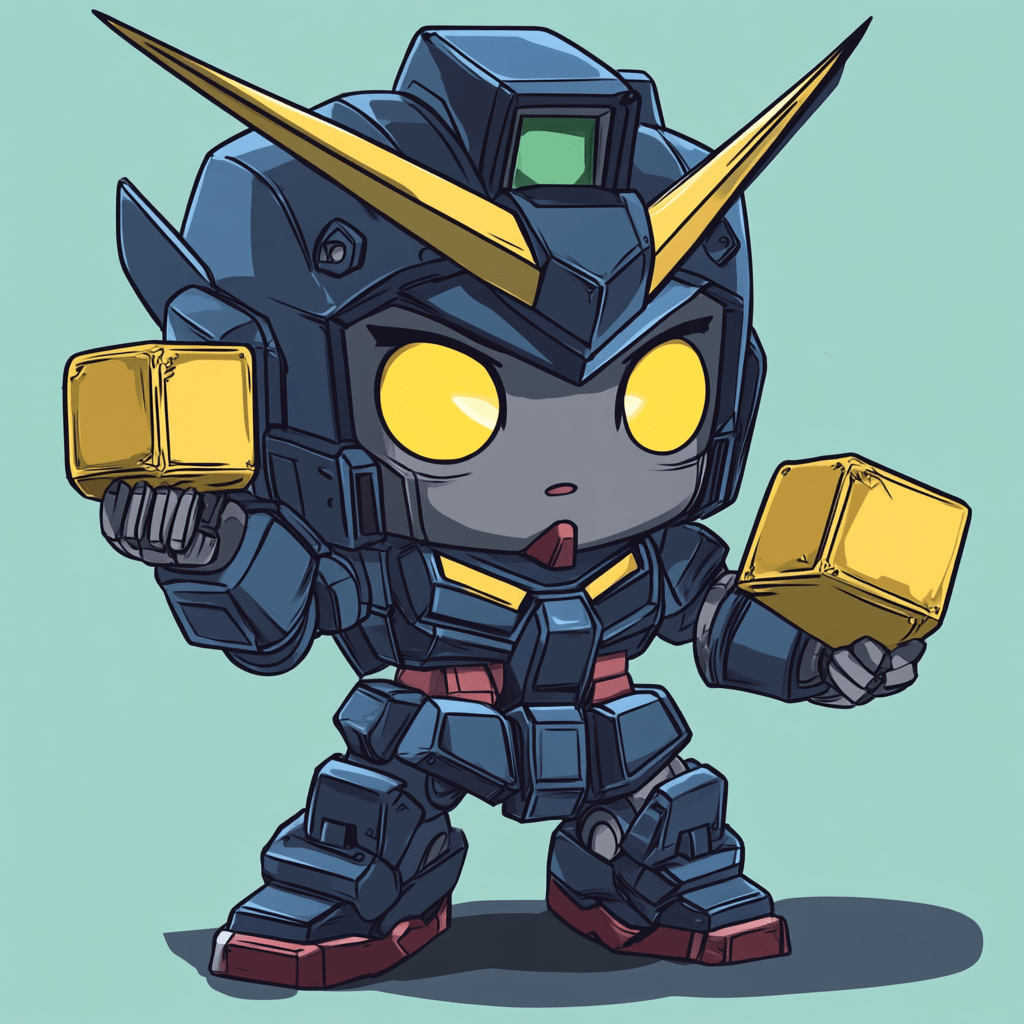
If you’ve ever seen the Apple TV show Monarch or the amazing new anime Kaiju No. 8, being a regular person in the middle of a giant monster attack would absolutely suck. Furthermore, it would be incredibly stressful, yet rewarding, being a part of an organization who’s job is to help those people in the middle of a kaiju attack, all while managing the Kaiju itself.
That is the feeling I’m wanting to capture with my game.
In my game, Monster Emergency and Crisis Handling Agency, or M.E.C.H.A. for short, you have workers (called Agents) that you can deploy into the city’s zones or buildings. The various buildings on the map have multiple levels that the Kaiju can destroy, which also double as the worker-placement action spots.
Playtest Session – M.E.C.H.A. v4.1 – 8-10-2024
In version 4.1 (tested on Saturday 8/10), the game had different buildings with different level amounts – small, medium, and large, with 1, 2, and 3 levels respectively. In this version, the worker actions were tied to the zone the buildings were in.
In the Player Phase, Each player took a turn, placing 1 of their 3 workers in a zone, doing the action the space says (usually gaining resources). When you got resources, you pulled from a bag. If you pulled a Red Cube, that was an Emergency! You flipped up a card and that was an Emergency on the board which could be solved if you can give it resources. You can also use resources to repair buildings and Mech Parts. When you committed resources, you roll dice to see if some of the parts you were using broke in the process – if they did, they get added to the Broken Resources pile. Then came the Kaiju Phase.
In the Kaiju Phase you flipped over cards equal to the amount of Emergencies and Broken Resources there are. Kaiju cards move and activated the Kaiju. The Kaiju always moved towards the Mecha Hangar. If the Kaiju stepped on an Emergency, it immediately goes to the Red Alert section of the Emergency Tracker. Players lose if there are 5 Red Alerts or if the Kaiju reaches the Mech hangar. Players win if there are no Emergencies on the track OR they build the Mecha in time.
There are Schematics Cards you can draw from Building actions, which give you one-time or constant abilities for your workers. Constant abilities require you to build them using resources.
Feedback and Findings
The thing we need to do is hurting us
Because the resources were mixed in with the Emergencies, the players said it felt bad that the only thing we can do to get closer to the win-con is do the thing that can and will hurt us.
The idea of the bag pulling was the Agents digging through the rubble of the city to find resources to use, but then could find someone in need of help in the process. They then alert the team (public card), assess it’s Emergency level (Emergency tracker), and state what they need to be fully helped (resource cost).
Mechanically and thematically it didn’t ring well with this playtest group. It was too random and hurtful, since not only was the pull random, but you can also get hurt by pulling another Emergency. This made me want to try something new with the resources.
I want to move around the board
The players stated that it felt like they were just throwing meeples on a board and then seeing/doing what happens. They felt it could be more thematic and dramatic. One playtester even said that they should be able to walk around the map. When he said that, the entire playtest group agreed, including myself. It would be cool to run around the map and avoid a kaiju coming at me, AND would feel exciting to put them in risk of getting stepped on in order to get a high reward.
Too many worker spots
“The board either needs to matter much more or much less.” – Patrick, Playtester of v4.1
The board was in a 3×3 main grid, with small 3×3 sub grids within each main grid square. The worker action was tied to the building on each main grid, so there was never really a lack of movement spots. This made it so it wasn’t interesting to make worker placement choice, since everything was available to you at all times – leading to the decision that worker spaces should be tied to the building, not the zone, and that the Kaiju attacking the building would lessen the amount of available spaces on there. Amazing.
Emergencies were flooded and were more annoying than disastrous
Emergencies kept coming up way faster than the players could possibly deal with them. Furthermore, they cost resources that the Mech parts also required. So not only did working on Emergencies brought them further from the Mecha win-con, but there were so many that working on them felt like a losing battle anyway.
This was annoying, not threatening or disastrous. The feeling I want should come with both knowing that we can complete the emergencies while simultaneously knowing ignoring it would cost the game. I need it to feel more disastrous, but with hope in reach.
I want to Pilot the Mech
Yeah, don’t we all? I guess I should have known this, but at first I wanted the focus to be on the teams and not just the Mech. Hindsight 20/20, how the heck could I focus on anything else when building the Mech was a win-con!?
This led me to make the completed Mech parts a new worker space, granting very powerful actions. The caveat is, since it’s a Prototype Mech, they have a chance of Overheating when you use them, locking them out of being used for the remainder of the game.
Changes made for M.E.C.H.A. v4.2
Simultaneous Worker Placement and Movement
I changed the flow of the 2 phases of the game, Agent and Kaiju.
In the Agent Phase, all players now simultaneously chose whether they want to Deploy workers (place them) from their Airship (player mat) to the City (board), Move workers currently in the City, or Recall workers back to the air ship. Each of the actions can be unique to the worker. For example: If I had 2 workers in the City and 1 in my Airship, I can move 1 worker in the City, recall 1 worker to my Airship, and Deploy a worker to a building within the City.
In the Kaiju Phase, the players draw cards from the Kaiju Deck equal to the number of players, and the Kaiju acts accordingly. Some cards moved him, other cards made him attack, while some cards read “Crisis in Region 1.” Those cards added a Crisis counter on each of Districts in that Region. If a Kaiju stepped into a District with Crisis counters on them, that brought the Players closer to defeat by increasing the new Crisis Meter for that Region (mentioned below).
You can decrease the Crisis Meters by bringing Crisis counters to evacuation spots in the City – which you can do so by Moving workers. Each worker can bring 1 Crisis counter (upgradable by Schematics cards) with it when they move.
Finally, at the end of the Kaiju Phase, you shuffle the Target Deck and flip the the top Target Card. This denotes what the Kaiju is going to move towards (if he moves). There are 3 cards in the deck: Mecha Hangar, Most Crisis Counters, Most Workers.
Removed the 3×3 grids, Added Zones and Bridges
Using Tokyo as a frame of reference, I divided the map into Districts, and then grouped Districts together into Regions. Districts were connected by Bridges, denoting how and where workers can move.
Removed the Bag, Added Bridges
I removed the bag entirely and tied resources to Bridges. When players moved on a bridge, they get to collect resources.
This was a difficult decision to make as I felt this was a mechanical necessity, but not really thematic. I’m finding it difficult to justify how the players acquire resources thematically. In v4.1, the story was the Kaiju has just torn up the city but was pushed back by the Mecha, and we need to repair the Mech OR evacuate the City before the Kaiju shows back up. This made it easy to say “oh, they’re digging through the rubble and finding things.” But the v4.1 -playtesters’ feedback of “I want to see the Monster more” and “The bag was meh” resonated with me. I completely agree that we need to see the monster more, but what does that mean for the resources? The buildings are still up, so theres no rubble to go through, but there still should be resources to build back up the mech, right?
Removed the Emergency Meter and Emergency Counters/Cards, added 3 Crisis Meters and Crisis Cards to the Kaiju Deck
Instead of 1 Emergency meter, I added a Crisis Meter for each Region on the board for a total of 3 Crisis Meters. When the Kaiju steps into a District with Crisis Counters, that Region’s Crisis went up by the amount of Crisis Counters stepped on. When 2 of the 3 Meters were at max, the players lose.
Added Mecha Parts as usable actions via the Mecha Hangar
Its a personal dream to be able to pilot a Mech – and while not the focus, its still would be cool to be able to give a taste of it in this game. I added powerful actions for each individual mech part. To use them, you have to go to the Mech Hangar – there is no limit to how many workers can use that part’s action on a turn, but each use requires a dice roll. If you roll a failure (1) on any of the dice, that Mech part is Overheated and can no longer be used the rest of the game (though it being built still counts as part of the win-con).
Part III coming up…
This was mostly a recap of my M.E.C.H.A. v4.1 playthrough and feedback experience. I playtested v4.2 two days later, and will posting that experience shortly (this time, with pictures!)
For now, let me know in the comments if you have ideas about resource pickup (either thematically or mechanically) or the threat management mechanics. It’s where I feel I need the most help. Thank you!
 The Board Game Mechanic
Leave a comment